
Work
What Is A Career? 5 Steps That Can Help You Make The Right Career Choice


Being smart and self-driven individuals, we all want to do well for ourselves. Everyone wants to excel in his career, but what is a career?
Perhaps your ideal career is no more satisfying, and you are unable to achieve your ultimate goals. Don’t worry; we all face these moments in our careers. A change of direction, strategy and mindset can help us in the journey forward.
The desire of becoming top-performer and accomplished in our field is quite natural. Yet we often find ourselves in a fix when choosing the best way to move ahead.
Making the right choice in professional and personal life is undeniable, so we need to understand the difference between job and career.
What Is a Career?
A career implies you remain in the same sort of work for a long time. It is the way we select to fulfill our professional ambitions and goals.
Occupation is the finest blend of education, training, and work experience to help us progress in our jobs or make leaps in a career for a better future.
It is a life long journey.
What Is the Difference Between a Job and a Career?
People often mix job with career. But both have distinct differences.
A job is a work for which you get paid. It includes a specific task over a fixed rate. A job is a regular duty or responsibility. It marks the permanent position of employment.
We have multiple job options available for us today. Some require a particular educational background and skillset, whereas some others do not demand any formal education.
For example, trade like carpenters, butchers, hairstylists, and plumbers, etc. are more focused on skills but professions like medicine, librarians, teachers, and geologists, etc. demand degrees.
Technical and administrative jobs are flexible. Some require university degrees, whereas others do not ask for educational background.
On the other hand, career means the work you do for years. It can comprise one or multiple jobs. It aims at improving skills. It consists of work-related experiences to ensure a linear progression. It serves as stability within a field and its connected dimensions to make a person move up the ladder.
In a nutshell, a job is an onetime event, and a career is a lifetime sequence of jobs. Switching from one job to another is easy, but changing a career is difficult.
“The future depends on what you do today.”
—Mahatma Gandhi
5 Steps to Make the Best Career Development Planning
Career choices significantly impact life. That is crucial to plan a career wisely. It gives us a needed direction to reach the desired place. It unveils our strengths and weaknesses and unfolds the required abilities and knowledge to attain our future goals.
Only a few born with a clear mind are well aware of where they want to see them in the future, but many of us spend much of our time strategizing about life ahead. So it is vital to plan things well.
Career planning is a proactive process and gives meaning and purpose to life.
These are the ultimate 5 steps to make career planning easy for you to enhance your chances of success and reap the gains.
1. What kind of person are you?
Self-awareness is the key to reach your potential. It helps you to hold yourself and be determined to execute your plans and achieve goals.
If you know who you are. You can decide your path and test your limits. Self-realization makes you learn about yourself and figure out possibilities. You aim to target bull’s eye instead of beating about the bush.
If you know your personality type, then definitely you know your worth not only for yourself but also for the society.
Self-actualization is the way to seize opportunities that help you succeed. Be the representative of self-improvement and inspiration for others.
Career is not about money-making only. Knowing yourself well is the key to career planning. It is important to align your career with your personality to ensure mental satisfaction and enjoy your work.
Knowing oneself is a must ingredient of innovative and healthy learning experience to contribute maximum at your workplace or in your career. It helps us to use our talent in the best possible manner to initiate rather than criticize or complain.
If you want to love what you are doing, understand yourself.
“Opportunities don’t happen, you create them.”
—Chris Grosser
2. What do you want?
What do we want in our careers?
A fundamental question, but the reality is that many of us do not know the answer. We do not have time to sit and think that what would bring true happiness.
Does only growth or promotion matter?
On the off chance, if you are a man of many talents and interests, selection can be difficult in that case.
If you are afraid of making the wrong choices, here is your answer to what do you want.
· Focus on your skills
We are all treasure house of abilities and can learn and develop more skills. But we need to identify the skills that are required for our career expansion.
Delineate the skills you are currently employing.
Are you satisfied with them?
Are you ready to hone those skills that bring joy to you?
· Reveal your values
Your work experiences are not only about your skills or the tasks you perform. Your values also matter a lot. How good you are at collaborating with others for the achievement of a greater purpose is critical when it comes to knowing whether you are enjoying your job or not.
· Include your brand
Do you have a personal brand?
What are you best at?
Be the brand everyone wants. Make a difference by reflecting that you love your work.
After assessing your skills, values, and brand, focus on the roles that satisfy you.
3. What can support you?
Career planning can help to make imperative work choices to obtain maximum benefits. It is a continuous process to adjust plans and handle the realities of the professional world.
It is all about your priorities and realities. Rapid changes in society, the world economy, and technological advancements may put an end to a few career types or introduce some new.
Be ready to discover more and embrace changes to take control of your career.
Expedite your employability skills because they go hand in hand with you everywhere and lead to a rewarding career.
Covert your interests and passions into small businesses. Unleash your entrepreneurial spirit to figure out how and when to make alterations, delve into your learning, life and work options.
4. What fits you the most?
Another essential step in career development planning is to know what suits you the most. Set your goals and investigate occupational opportunities to anticipate your long-term prospects in any organization.
It is mandatory to look for opportunities well fitted to your interests, capacities, and abilities. But for that, you need to be specific and set measured and reachable goals to pursue success in your field.
Setting personalized goals and aims are of paramount importance for moving up the ladder of success.
Be flexible and generic yet realistic to decide your aspirations while restructuring your career plan with an open door policy to make improvements and manage progress.
Be mindful of organizational rules and regulations and local HR laws and set a time frame to motivate yourself to achieve what you have desired.
There are many options available for us, but the wiser among us narrow down those and choose the best and most suitable for them as per their comfort level and situation.
“Find out what you like doing best, and get someone to pay you for doing it.”
—Katharine Whitehorn
5. What can you choose in the end?
Communication with seniors and peers is a salient feature of the career development plan to know about the dynamics of various working spheres.
Keep track of your progress and evaluate the weaknesses and strengths of your plan. Hold yourself accountable for setting attainable objectives and assuring the successful implementation of the plan to meet your goals.
A good performance review, getting a new job or promotion, growing your career contacts, or receiving an award can serve as metrics for success.
Update your goals regularly and periodically review them in compliance with your circumstances. There is no harm in altering your direction if you can stay flexible.
Do you want to estimate your personal interests and style? Attempt these career tests from 123test and princetonreview to discover your job interest.
What Are Future Careers?
Few jobs seem to have a brighter future than others. There is a whole new range of non-traditional careers available for young minds.
Tech jobs and the medical profession is on top of the list when it comes to handsome pay and facilities.
In this global era of rapid technological advancements, information security analysts, computer users support specialists, data analysts and all other computer occupations are the most rewarding careers.
Licensed practical and vocational nurses, paramedical staff and qualified medical practitioners are always in demand.
Engineers, blockchain developers, technicians, agricultural specialists, brand advisors and educationists are and will be among favorite occupations for many individuals because of monetary benefits and mental peace and satisfaction.
Bottom Line
Whether you are a fresh graduate or have been employed for years, a career development plan is a tool to guide you to reach your targets, stay motivated, and boost your performance to take your next career level.
It creates the space to lead with curiosity and pave your paths on the road to success.

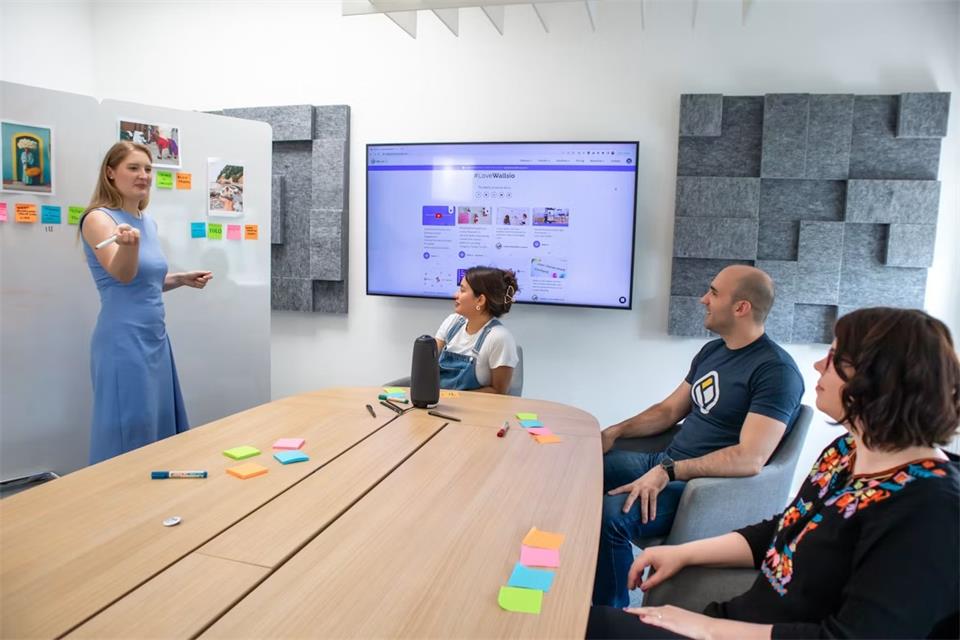
A professional and respectful workplace forms the bedrock of great companies. It’s an environment where creativity thrives, collaboration happens naturally, and people feel safe contributing their best work.
But this positive culture doesn’t just appear. It’s built on a shared understanding of acceptable conduct, guided by clear principles and policies that protect everyone on the team. Every employee, manager, and business owner needs to understand these guidelines.
Defining Professional Behavior
Professional behavior goes far beyond a dress code or showing up on time. It centers on respect, accountability, and communication. This means treating colleagues, clients, and partners with courtesy, valuing diverse perspectives, and approaching your work reliably and responsibly.
In practice, this includes giving and receiving feedback constructively, communicating clearly to avoid misunderstandings, and taking ownership of your tasks and deadlines.
These aren’t just soft skills. They are essential practices for professional conduct that directly affect productivity and morale. A team that trusts and respects each other is more likely to innovate and solve problems effectively.
Simple actions like listening without interrupting, acknowledging others’ contributions, and maintaining a positive attitude can transform a work environment.
The Role of Company Policies
Clear, written policies aren’t only for large corporations. Even for small teams and startups, they provide a critical framework that sets expectations and outlines how to handle issues. A well-defined code of conduct and anti-harassment policy are essential documents.
They turn expectations from an unspoken understanding into concrete guidelines everyone can follow. This clarity protects both employees and the business itself.
When these policies are missing or poorly enforced, misunderstandings can turn into serious conflicts, including claims of harassment or a hostile work environment. In such situations, the consequences can devastate team morale and the company’s reputation.
If you find yourself in a situation where workplace boundaries have been crossed and policies are failing, seeking guidance from premiere sexual harassment attorneys can be a necessary step to understand your rights and options. A formal policy is the first line of defense in preventing such scenarios.
Ethical Considerations in Daily Work
Beyond formal rules, ethics guide our daily decisions and actions. Professional conduct is rooted in ethical principles like honesty, integrity, and fairness. This means being truthful with clients and colleagues, protecting confidential information, and avoiding conflicts of interest that could compromise your judgment.
For example, accurately tracking billable hours, giving proper credit for collaborative work, and being transparent about potential business conflicts are all ethical actions.
These considerations build trust, which is the currency of any successful professional relationship. When clients and team members know they can depend on your integrity, it strengthens your reputation and fosters long-term loyalty.
Ethical behavior isn’t just about avoiding trouble. It’s about actively choosing to do the right thing, even when no one is watching.
Legal Frameworks Governing Conduct
Workplace conduct isn’t just a matter of company preference. It’s also governed by a web of local, state, and federal laws. These legal frameworks protect employees from discrimination, harassment, and unsafe working conditions.
Laws like Title VII of the Civil Rights Act of 1964 prohibit discrimination based on race, color, religion, sex, and national origin, forming the basis for many workplace policies.
Companies create a code of conduct not only to foster a positive culture but also to ensure they comply with these legal standards. Understanding that these rules are backed by law reinforces their importance and highlights the serious consequences of violations.
These laws establish a baseline for acceptable behavior, holding organizations accountable for creating a safe and equitable environment for all.
Promoting a Positive Environment
Creating a positive workplace requires proactive, ongoing effort. It starts with leaders modeling the desired behaviors. When managers and executives show respect, communicate openly, and act with integrity, it sets a powerful example for the entire organization. Encouraging open dialogue where employees feel safe to voice concerns without fear of retaliation is also key.
Regular training on topics like harassment prevention and diversity and inclusion can reinforce expectations and give employees tools to navigate complex situations. Ultimately, promoting a positive environment means investing in your people.
When employees feel valued, respected, and safe, they are more engaged, productive, and committed to the company’s success. This creates a cycle where a great culture attracts and retains great talent.
Establishing and upholding clear conduct guidelines isn’t about restricting people. It’s about creating the freedom for everyone to succeed together. A workplace built on respect and integrity is one where innovation, collaboration, and professional growth can truly thrive.

Employee engagement at a corporate event doesn’t happen because the venue is nice or the agenda looks full. It happens – or it doesn’t – based on decisions made weeks in advance about how time, energy, and attention are allocated. Most events fail to engage not because the content is bad, but because the structure works against how people actually think and connect.
Design around energy, not just time
Many corporate events are organized around the availability of the room or based on when people are most likely to show up. The reality is that these events are often bunches of slots, filled with whatever happens to be handy.
A better way is to organize your event over the natural energy curve of a day – to make slot-filling intentional.
For most of us, the cognitive peak happens mid-morning. For the majority of the population, our peak times approximately fall between 9:30 and 11:30. This why we spend so many important meetings, hard conversations, and big decisions at this time.
Using that knowledge, use that window for new content, complex decisions, and anything that requires real concentration. Exit the heavy stuff by late morning, when energy starts to dip. And exit the morning when people are at their best for changes and interactions. For the truly tactical, the 90-minute window after lunch is when most people’s attention crashes.
This is not the time for another lean-in, PowerPoint-filled meeting. It’s not a moral failing to slump at that time. It’s biological. So don’t fill it with more heavy content. Instead, use it for workshops, unconference-style meetings, peer learning, or any form of physical activity that gets you moving – since the vast majority of you haven’t done so since the morning.
Break the echo chamber with an outside voice
One of the most counterproductive patterns in corporate events is using the same internal voices to deliver every message. When a leadership team has been saying the same things for months or years, even genuinely good ideas start sounding like noise.
Bringing in an external perspective changes the dynamic. Employees are often far more receptive to core company values when they hear them articulated by someone who isn’t their boss – someone who has lived those principles in a completely different context.
This is why motivational inspirational speakers can serve as the emotional anchor of a well-structured event. They connect the company’s overarching theme to something that lands at a personal level, in a way that an internal presenter almost never can.
Using an external speaker to set the tone for the day also signals to the rest of the presenters that this won’t just be business as usual. By bringing in someone with a new, relevant perspective, it says that this day is about change, and that these ideas are here to push the company forward.
Build interaction into the structure, not around it
The 60/40 rule is a good rule of thumb to adopt: no more than 60% of the event should be presentation-format content. The remaining 40% should be participatory – workshops, structured peer discussion, live polls, Q&A, or group problem-solving. This also contributes to teamwork and interdepartmental collaboration.
This is not just about making the event “fun” which should never be used as a synonym for “beside the point”. Passive listening produces minimal retention. Active involvement, where people have to form an opinion, defend an idea, or apply a concept in the room, produces something they actually carry back to their work.
Gamification can work well here but only when it is used in the scenarios of the event and not as a lateral motivation. A leaderboard based on session attendance measures presence, not engagement. It tells you who showed up, not who paid attention. A challenge where teams compete to produce the best solution to a real company problem is both engaging and produces output that the business can use.
Micro-networking slots – these 10-minute structured windows between sessions – are incredibly efficient and underutilized. They are short enough that they don’t feel burdensome but long enough that two people who do not know each other can actually have a real meeting and exchange of business cards. Done well there can be the 2 hours of a 1-day event that does more cross-functional connection than the 2-hour cocktail reception.
Engagement only means something if it ties to a real goal
Business units with high engagement have 23% better profitability than disengaged ones. This piece of information is relevant because it changes our perspective on a corporate event. It’s not just about boosting morale. It is a tool to foster the kind of synchronization and enthusiasm that have a positive impact on business outcomes.
This approach will only be effective if the event theme corresponds to a precise, measurable business goal. For instance, “we want every team to leave with one clear priority for Q3” can be a goal-oriented theme. The overall event can help rally your team around the focus areas they would have done anyway, should it not have happened.
Then host to this structure. Every session, speaker, and workshop is either moving people closer to the goal or wasting their time. If they’re not helping, cut them, no matter how popular they are with certain groups or senior leaders.
Design your post-event survey to gather feedback on whether the event lived up to its structural purpose. “What’s one thing you’ll do differently based on today?” allows you to see how much residue from the event persists in the following days. “Did you enjoy the launch event?” is less useful.
The event as cultural infrastructure
A corporate event is a rare chance to create a step-change in how people feel about their jobs and the company. Yet it’s amazing how often that chance is squandered. Too many events are planned around what fits easily into an afternoon, or what a consultant has previously done, or what will anchor people in a hotel conference room the longest.
Disciplines like physiology, psychology and cognitive science reveal a lot about how humans learn and connect. Their key insights are not new, but they are often overlooked in an ocean of half-remembered conventional wisdom.

If you feel as though you just can’t stay focused during the day, or if you feel as though you just can’t stay on task no matter how hard you try, then it’s important to address the reason why.
If you can try to get more focused time in the day, then this will help you to perform better at work, and you may even find that you have more time to focus on the things that are important to you, rather than getting sidetracked all the time. If you want to find out more, then take a look below.
Audit your Time
The first thing you need to do is try to audit your time. You need to see how much of it is focused and how much of it is meaningful work. If this isn’t a good amount for you, or if you feel as though you need to increase your focused hours, then this will help you to see where your time is going first.
Ask yourself what is meaningful, and also make sure that you try to create time for more meaningful activities, rather than being distracted all day. If you can do this, then you can make positive changes that really help you later down the line.
You might also want to try to assess what you would like to devote more time to. Writing down 3-4 things here will help you hone in on what you can do to try to turn things around.

Create a Focused Workspace
Another thing you need to do is create a focused workspace. A lot of the time, you may find that you end up pushing back more meaningful tasks because they take longer. You might also find that you don’t have time right now to do something that is going to take you longer than half an hour.
If you want to help yourself, then you need to try to create a space that allows you to work. It’s important to set yourself up for success. Make sure that your space allows you to focus, and that you are also able to access your computer or any apps you might need.
If there is always something you need to do in the morning, try to take care of that the day before, so you can put yourself on a more positive path.
Eliminate Distractions
Eliminating distractions is so important. If you don’t feel as though anything is distracting you, then you may need some help on a more physical level. If you have not thought about it yet, then getting brain performance support with Unifiram can be good.
This is a great way for you to increase focus in the day while also making sure that you are not continually struggling with being distracted. Some foods will also increase your focus, and others will make you more distractible.
If you can do this, then you will soon find that it is easier for you to not only get more done in the day but also make sure that you are taking steps that benefit you down the line.

How Digital Asset Businesses Can Strengthen Compliance and Financial Reporting

How Employee Well-Being Supports Productivity and Long-Term Business Performance

A First-Timer’s Guide to Using HubSpot as a Real Estate CRM

Digital Transformation for Physical Spaces: A New Approach

Digital Readiness: Future-Proofing Your Business Operations

125 Inspirational Car Quotes and Captions to Celebrate Your New Car

188 Deep Hurt Quotes with Images

148 Romantic Love Quotes for Her from the Heart

164 Relationship Goals Quotes for New Couples Expecting a Long Lasting Relationship

185 Cute Boyfriend Quotes for the Guy You Love
-
 Quotes6 years ago
125 Inspirational Car Quotes and Captions to Celebrate Your New Car
-
Growth6 years ago
188 Deep Hurt Quotes with Images
-
Quotes6 years ago
148 Romantic Love Quotes for Her from the Heart
-
Quotes5 years ago
164 Relationship Goals Quotes for New Couples Expecting a Long Lasting Relationship
-
Quotes6 years ago
185 Cute Boyfriend Quotes for the Guy You Love
-
Quotes6 years ago
141 Best Heart Touching Quotes about Love, Life, and Friendship
-
Quotes5 years ago
134 Time Flies Quotes for the Unforgettable Moments
-
Quotes5 years ago
122 Inspirational Kite Quotes That’ll Make You Wanna Fly Right Now