
Lifesytle
The Outdoor Safety Risk Sitting Right on Your Finger


Ask anyone about outdoor safety, and you’ll hear the same list every time: good boots, a first aid kit, enough water for the trail, layers in case the weather turns. Almost nobody mentions the ring on their finger, even though it’s coming along for the whole trip too — up a rock face, out on a boat, wherever the day takes you.
Your wedding ring sounds like a strange thing to worry about, but outdoor activities put your hands through more grabbing, gripping, and unpredictable movement than almost anything else you do. That combination can lead to a rare but serious injury called ring avulsion.
What Ring Avulsion Is, and Why the Outdoors Makes It More Likely to Happen
Imagine your ring catches on a branch, a rock ledge, or the edge of a carabiner. Metal doesn’t give, so when your hand keeps moving and the ring doesn’t, the strain has to go somewhere else.
That somewhere is your finger. Surgeons actually use a grading system for how severe these injuries can get. Many cases are just swelling and a bad bruise, but a few are more serious, up to and including a loss of blood supply to the finger.
A Rigid Ring Has No Safety Release
Metal rings are designed for permanence, which is usually a selling point. But they aren’t designed with any kind of safety release mechanism, and that becomes relevant the moment a ring gets caught on something.
Compare that to how other outdoor gear works: a climbing harness has a quick-release buckle, and a backpack has a sternum strap you can pop open in seconds.
A ring doesn’t have an equivalent. If it catches, the only thing that can move is the finger wearing it.
Alternatives to Consider
A growing number of people who spend serious time outdoors have started treating their ring like any other piece of gear — something to swap out depending on the activity.
A wedding band or fine jewelry piece stays safely at home, while a flexible silicone wedding band (like those from Enso or similar brands) is used during outdoor activities.
Silicone rings tend to be the material of choice here, for a few practical reasons:
- They’re designed to flex rather and even tear off when under extreme stress, which can help lower the risk of ring avulsion in the first place.
- They handle water, mud, and rough conditions well, without needing the special care a polished metal band requires.
- They’re affordable enough to keep one in a hiking pack, one in a tackle box, and one in a gym bag without a second thought.
- Silicone styles come in enough colors, widths, and finishes that they don’t feel like a downgrade from a traditional ring.
Building a Silicone Ring Into Your Pre-Trip Checklist
The easiest way to build this habit is to treat it like any other piece of outdoor prep. Before a hike, a climb, a ride, or a day on the water, take a second to think about what your hands will actually be doing.
If the activity involves gripping gear, scrambling over terrain, or handling equipment where a snag is even remotely possible, that’s the moment to swap a rigid ring for a flexible one.
It takes about as much effort as checking the weather, and unlike a lot of outdoor safety advice, it doesn’t cost much or require learning anything new. It’s simply a small substitution that removes one very specific risk from the list of things that could go wrong on an otherwise good day outside.
The Bottom Line
Outdoor safety is usually discussed in terms of terrain, weather, and gear failure. A ring rarely makes that list, even though it sits on one of the most active parts of your body during almost every outdoor activity. Paying attention to it costs nothing and takes only a few seconds of planning. Given what’s at stake, that’s a fairly easy trade.

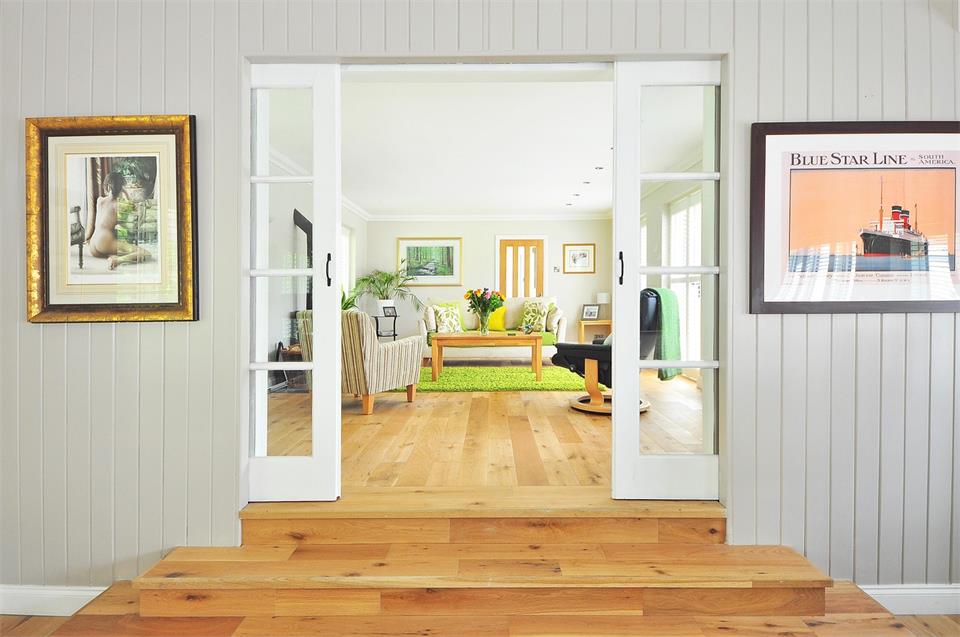
Many homeowners select flooring on the same basis they choose their paint: a showroom tour followed by the proclamation, “That’s nice. I’ll take it!” The issue with that strategy is flooring decisions have downstream implications on cabinet height, door clearances, subfloor prep, and installation sequencing. In other words, flooring decisions must be finalized before the tear-out begins, lest you pay twice for the same material.
Entryways Need Flooring That Can Take the Abuse
Every renovation has to start somewhere, and in this case should start at the entrance to the property. Entryways and mudrooms get hit with water, tracked dirt, dropped keys, and pet business on a daily basis. As such, a solid hardwood is out as an option due to its susceptibility to moisture and general fragility in the face of heavy traffic.
Porcelain tile or rigid core luxury vinyl plank are much better options for the high-traffic, high-moisture area as both can resist the effects of water damage and are available in wood-look patterns for those desiring to extend a flooring design throughout a home.
Slip resistance in the entry is a huge concern as well, which is why one should examine the coefficient of friction (COF) of any tile being considered for the space. The showroom may make a tile look luxurious and inviting, but it can turn into something of a hazard as soon as it gets wet
If one is considering extending a hardwood floor into an entry, it’s best to stop at a transition strip and then start the next flooring option at the threshold near the front door.
Kitchens Need Flooring Built for Spills and Traffic
After all, kitchens are the grease pits of the home. Whether it’s spilled liquid, greasy splashbacks from the stove, or the dog learning that the kitchen is the perfect place to relieve himself, the kitchen floor is going to endure more than any other room in the house. The kitchen also serves as the thoroughfare to all parts of the house, meaning the floor needs to handle heavy foot traffic in addition to whatever else is dumped on it.
The characteristics to consider when choosing a flooring material for the kitchen are similar to those of the entry in that the floor needs to resist water damage and have a non-slick surface for safety, especially for those in the household with mobility concerns. Porcelain tile and rigid core luxury vinyl plank are much better options for a kitchen due to their resistance to water, stains, and dents.
With vinyl, an eye should be kept on the thickness and clear coat of the top-wear layer (measured in mils), as a lower than 12 mil thickness can lead to excessive scratches and gouges in the flooring. Laminate is tempting in a kitchen scenario because of the lower cost and visual appeal, but it’s a poor choice for the increased likelihood of damage around standing water (the seams can swell if the flooring gets wet).
The core layer of laminate flooring is basically sponge which can retain water, a problem especially around a dishwasher or washing machine.
Bathrooms Put Waterproofing First
It’s rare for a homeowner to choose a bathroom floor based on aesthetics, and it should be rare for a contractor to advise someone to choose a bathroom floor based on aesthetics.
The short version of this is that the bathroom is where water-vulnerable floors get their comeuppance, and as such it’s a good idea to select a durable and easy-to-clean option for the space.
The long version speaks to the reality that a bathroom is the single most humid room in the house, and as such it’s likely to see both accidental spills and water accumulation underneath the toilet if the sealant around it fails (the same goes for around the shower/tub).
The top recommendation for a bathroom floor is porcelain tile installed over a waterproof membrane, as it’s about as close to totally waterproof as one can get with floor covering. However, it’s a cold, hard option for those uninterested in the feel of a five-year-old concrete basement at the end of every day.
Waterproof vinyl plank can be an excellent second choice material for a bathroom (avoid peel-and-stick varieties), as it too is totally waterproof but with the benefit of being more pleasant to bare feet. It’s important to note that any vinyl plank installed in a bathroom should be of the rigid core variety as the flexible planks can easily be lifted at the seams like traditional tongue-and-groove laminate.
Avoid installing either solid hardwood or traditional laminate in a bathroom, as the seams will absorb water and cause swelling. If tile is chosen as the material, time should be allocated to sealing the grout, an oft-overlooked maintenance task. Failure to properly seal bathroom grout is often the reason a five-year-old bathroom floor looks ten years old.
Bedrooms Reward Comfort Underfoot
A plush, cozy floor is the stuff of relaxation in the bedroom, and the feel of it under bare feet after a long day is unmatched. For those unfortunate enough to live in a house where the climate can’t support a beach-house year-round existence, the softness and warmth of a thick carpet are even more appealing.
That doesn’t mean that other flooring options can’t be employed to similar effect, though, especially if the homeowner has allergies and finds that the carpet fibers hold onto pet dander and dust too easily. Hardwood paired with an area rug can offer the same softness without the allergen consequences for some.
Frieze and berber carpets are much harder wearing than plush variants, though, so one should be aware that berber has a lower comfort factor than plush and is more of a traffic floor than a cozy retreat.
The common areas (living room, family room, great room, etc.) tend to benefit most from prefinished distressed hardwood, especially if the space sees a fair amount of foot traffic from kids, dogs, and/or grandparents. Prefinished floors are best in these rooms as the finish will help resist the effects of heavy traffic and power cleaning (both of which are necessary for a space regularly used by a large number of people).
Prefinished flooring in a kitchen is also an option, as long as one doesn’t have large dogs (who can cause dents in the wood during play). Prefinished flooring in the kitchen should avoid the possibility of water getting to the seams, however, as that can cause subfloor damage that may necessitate replacement of the entire flooring.
Oak tends to be the hardwood of choice for prefinished flooring due to its flexibility and forgiving nature. Maple is a harder wood and will show dents more easily, especially in the grain, and hickory has a much more rustic appearance. None of the three woods should be chosen in relative isolation from the rest of the house, as most common rooms are joined to the kitchen and/or entry in most residences, and the three areas need to have a degree of cohesion.
Basements are generally off-limits to solid wood due to the likelihood of moisture exposure at some point during the life of the installation. The options are limited mostly to engineered hardwood and vinyl plank, as both have a much lower likelihood of delamination and swelling.
Tile, too, is a viable option for a basement floor as it’s impervious to moisture concerns completely. Engineered hardwood is made up of alternating layers of solid hardwood and plywood for stability, which reduces, but doesn’t eliminate, the ability for the floor to swell due to moisture. Vinyl plank is totally moisture-resistant and won’t swell or delaminate in the face of water damage.
Tile is an option for a basement if the subfloor (concrete) has been appropriately tested for moisture and cracks, as it is completely waterproof. Radiant floor heating is also an option for basement renovations in particularly cold climates, but an eye should be kept on material restrictions for the heating choice (tile and vinyl can work; hardwood species are often ruled out)
Flooring Choices Affect Cabinets, Trim, and Appliance Clearances
This makes the choice of the floor covering one of the most difficult decision points in the remodeling process, as it’s a large expenditure with little leeway for error
If one goes with tile and decides later to change course and go with vinyl plank, post-cabinet installation, there’s a good chance that appliances like a dishwasher won’t fit in the same manner. It’s critical, when ordering cabinetry and trim, to bring blueprints and/or room measurements to a full-service supplier who can quote materials and installation timing for the entire house.
A company like Wylie Carpet & Tile has the ability to source samples, analyze them in relation to the home’s cabinetry/appliances, and plan out the build in such a way that flooring doesn’t slow down the project unnecessarily.
Rooms need to be considered in conjunction with one another rather than individually.
Plan Connected Rooms as One Flooring System
The presence of a single flooring type, or at least one that uses the same plank throughout, is a huge aid in giving a home a more open feel, especially when considering connected rooms like the kitchen/dining combo or the living room/dining combo. Changes in flooring material require transition strips, which are used in every renovation regardless of an individual’s desire to avoid them.
The more of them present in a space, the more choppy and less thought out the finished work is apt to look. T-molding is used in transitions between two equal-height floors while reducer molding is used in conjunction with lower profile flooring (ex: tile to a thinner planked vinyl plank).
An eye should be given to where transition strips are going to be needed before installation begins, as retrofitting one in at a later date requires some unattractive cutting due to the nature of most planks.
Check the Subfloor Before Installation
Floating floors are a good option for most renovations due to the forgiving nature of the tongues and grooves, but they’re incredibly unforgiving when it comes to laying on carpet or tile. The uneven nature of a subfloor is often exaggerated when a floating floor is installed, making imperfections far more apparent.
Concrete subfloors are often inspected for moisture and cracks before a tile installation can commence while wood subfloors are inspected for levelness before any wood installation can begin. Older flooring is usually not left in place if a new version is going to replace it.
Subfloor leveling or replacement is often a huge expense, accounting for anywhere from 10-20% of the overall cost of a flooring renovation, and it’s the single aspect that’s forgotten by nearly every homeowner when the budget is being planned out. One should get an estimate of the cost beforehand when considering a floor renovation rather than after a large amount of time has been spent shopping at a local flooring store.
Another consideration for homeowners considering hardwood or laminate is the acclimation period, where the flooring is allowed to sit in the house before installation so that it can adjust to the local environment. Skipping this step will often result in expansion gaps or buckling (flooring coming off the subfloor) as the wood expands (from humidity) or contracts (from dryness). This step is often overlooked by DIYers with devastating results.
According to the National Association of Realtors, 91% of buyers prefer homes with hardwood flooring (2018 Remodeling Impact Report). It’s the reason why many homeowners request the material regardless of the room, despite the drawbacks already outlined. In short, it’s the most sought-after option for renovation and is worth considering on a room-by-room basis.
See Flooring Samples in Your Own Space
Showroom photos and lighting are two reasons why a flooring choice might look wonderful at the time of purchase but end up disappointing in the buyer’s home afterwards
Ordering samples of ones’ top choices and seeing them in the space is an important step in the process that should never be overlooked. One should spend time examining the samples in different lighting throughout the day and make sure the best options don’t disappoint on the home front. After choosing finalists, a few days should be spent considering the options before committing.
Pet owners can use that time to make sure one’s hardwood of choice won’t show damage from pet accidents, while more active homeowners can eliminate less durable options from the list of consideration. They should also be sure to avoid higher sheen options for high-traffic areas.
These are all practical matters that narrow the selection without regard to the individual’s personal preferences at the time of selection. After that, the shopping can begin in earnest with the power to choose from competing suppliers and avoid the pitfalls of the showroom.
Check the Plumbing Before the Subfloor Goes Down
The one trade most homeowners forget to consult during flooring planning is the plumber, yet a new floor can bury access to lines that run beneath a slab. If a kitchen or bathroom is on the renovation list, it pays to confirm there are no slow leaks or soft spots under the subfloor before anything permanent gets laid over them. Calling in a trenchless plumber at this stage makes sense because that kind of work locates and repairs lines without tearing up the slab you just prepared, and firms doing slab leak detection can trace a hidden leak to within a few feet before any demolition. Catching a cracked supply line now costs far less than lifting a finished hardwood floor to reach it six months later. It also lets the installation sequencing account for any repair work rather than colliding with it mid-project.
These seven considerations should be made before flooring installation begins so that the remainder of a home renovation can be conducted with confidence and efficiency.

High-performance gear is constantly evolving, from race cars to protective sports equipment. A focus on athlete safety has transformed design, moving away from simple one-size-fits-all gear. Today’s equipment is a sophisticated system for performance and protection, with ongoing efforts to advance player care at all levels.
This innovation is especially crucial in football. The helmet, once a basic piece of plastic and foam, has become a highly technical device.
Modern football helmet technology uses materials science, biomechanics, and data analysis to offer better protection than ever. Understanding these improvements helps parents, coaches, and players choose equipment that puts safety first. Let’s look at the main features that define a next-generation helmet.
Beyond the Shell: The Shift to Advanced Materials
For decades, standard helmet shells were made from polycarbonate, a tough plastic. Traditional designs often meant trading strength for weight, which can tire players and affect their form.
The new era of helmet design overcomes this with advanced materials that are both stronger and lighter. Engineers now use polymer blends and flexible outer shells that absorb and spread impact energy more effectively.
Instead of a rigid shell that sends force straight through, these materials can flex and bounce back, redirecting energy away from the head. A lighter, more advanced football helmet can make a real difference in comfort and endurance without sacrificing protection. This reduced weight helps players keep proper posture late in the game when fatigue sets in.
Smarter Impact Absorption Systems
While the outer shell is the first defense, the real innovation often happens inside. The padding in a next-generation helmet is far more than just foam. Modern helmets use sophisticated multi-layered systems designed to handle different types of impact forces. These include linear forces from a direct hit and rotational forces that twist the head.
Many advanced helmets now feature non-traditional padding structures like lattice-like grids made from elastomeric polymers. Manufacturers can tune these structures to compress and shift in multiple directions.
When an impact occurs, these internal components work together to slow down the forces and reduce the energy transferred to the head. Some designs also include fluid-filled pods or gel packs for an extra layer of cushioning.
The Importance of a Precision Fit
An ill-fitting helmet can’t offer the best protection. A loose helmet can shift during impact, while a tight one causes discomfort and distraction. Next-generation helmets solve this with highly customizable fitting systems that go beyond simple air bladders.
They often use interchangeable padding of different thicknesses for a custom fit around the crown, jaw, and back of the head.
Some manufacturers even use 3D scanning to map an athlete’s head for a truly bespoke fit. This customization ensures the helmet stays securely in place, allowing its protective systems to work as intended. A proper fit also affects an athlete’s confidence.
Studies have shown clear relationships between college football athletes and their equipment, where comfort and proper function play a role in their experience.
Data-Driven Design and Testing
Data is key to proving new helmet designs work. Helmet development is a science-driven field relying on extensive research and testing, not just trial and error.
Engineers use computer simulations and finite element analysis (FEA) to model how designs will perform under various impacts before building a physical prototype. Once created, prototypes undergo rigorous physical testing in labs that simulate on-field impacts.
Emerging helmet testing methods allow more accurate evaluations of how well a helmet reduces both linear and rotational forces. Some helmets are embedded with sensors during testing to collect real-time impact data that engineers use to refine their designs.
This cycle of design, testing, and analysis ensures each generation of helmets offers measurable improvement.
Ventilation and Athlete Comfort
While protection is the top priority, comfort and performance are closely linked. A hot and stuffy helmet can lead to early fatigue and decreased focus. Recognizing this, modern helmet designers have put a greater emphasis on ventilation. They use strategic vent placement and internal air channels to promote airflow, keeping the athlete cool and comfortable.
These airflow systems are often designed using computational fluid dynamics (CFD), the same technology used to optimize aerodynamics in airplanes and race cars. By creating channels that pull cool air in and push hot air out, these helmets can improve an athlete’s thermal regulation.
This focus on the complete user experience, balancing protection with practical comfort, is a hallmark of modern sports equipment. It ensures athletes can perform at their best, confident their gear is working with them.
Choosing the right equipment is a critical part of participating in any sport safely. As technology keeps advancing, the gear designed to protect athletes will only become smarter, lighter, and more effective. Looking for these key features helps you select a helmet that represents the best of modern innovation.

An automatic ice maker is one of those modern kitchen conveniences that you easily take for granted – until it suddenly stops working. Whether you are hosting a family gathering, preparing refreshing drinks on a hot summer afternoon, or managing a busy household, a broken ice machine can cause immediate inconvenience.
When your appliance stops delivering a steady supply of ice, searching for reliable ice maker repair near me allows you to connect with local specialists who can diagnose and resolve the issue quickly. Understanding the common causes behind ice maker failures can help you take fast action and restore comfort to your kitchen.
Common Ice Maker Problems
Residential ice makers are delicate mechanical and thermodynamic systems that rely on a precise balance of water flow, freezing temperatures, and electrical timing. Over time, heavy daily use can lead to several noticeable performance issues:
- No Ice Production. The machine runs but fails to produce any ice whatsoever, leaving the storage bin completely empty.
- Small or Cloudy Ice. The produced cubes are thin, hollow, or unusually cloudy, which typically indicates a restricted water flow or poor water filtration.
- Water Leaking. Water pools inside the freezer compartment or leaks out onto the kitchen floor, risking structural damage to your cabinetry and subflooring.
- Strange or Loud Noises. The unit emits loud clicking, grinding, or buzzing sounds during its harvesting cycle, pointing to mechanical strain or worn-out gears.
- Slow Production Speed. The ice maker takes an excessively long time to drop a single batch of cubes, failing to keep up with daily household demands.
- Ice Clumping. Produced ice melts slightly and freezes together into a solid, unusable block inside the storage bin, indicating erratic freezer temperatures.
Possible Causes of Ice Maker Failure
When an ice maker stops working correctly, the root cause can usually be traced back to a few specific mechanical or plumbing components. One of the most common culprits is an interrupted water supply line, which can become kinked, pinched, or disconnected behind the refrigerator.
Over time, an old, clogged water filter can become heavily restricted, severely reducing the water pressure reaching the appliance.
Inside the freezer, a frozen water inlet line can completely block water from entering the mold. Additionally, a faulty water inlet valve can fail to open electrically, while broken infrared bin sensors or mechanical shut-off arms can falsely signal to the control board that the bin is full.
Finally, internal mechanical failures, such as a burned-out ejector motor or cracked mold coatings, can stop the harvesting cycle entirely.
Why Professional Ice Maker Repair Is Better Than Guesswork
Attempting to fix an integrated ice maker without proper technical training often leads to further appliance damage and unnecessary repair expenses.
Because these units are deeply connected to both your home’s plumbing framework and the refrigerator’s internal electrical network, a single mistake can result in hidden water leaks or shorted control boards.
A professional technician possesses the advanced diagnostic instruments required to test water pressure, check voltage levels at the inlet valve, and inspect the complex mechanical assembly safely.
Relying on expert diagnostics ensures that the real cause of the malfunction is uncovered right away, bypassing hazardous guesswork and ensuring that all repairs comply with strict plumbing and electrical safety standards.
When to Search for Ice Maker Repair Near Me
While some minor kitchen issues can wait, certain situations demand a fast response from a qualified local service technician to prevent worsening property damage.
If you notice active water leaking from your refrigerator or inside the freezer liner, you should immediately turn off the water supply valve and contact a professional to avoid expensive floor rot.
Complete failure of the ice maker, recurring electrical errors, or persistent mechanical grinding sounds are also clear indicators that local same-day service is highly beneficial.
Partnering with a nearby specialist ensures that a technician can arrive at your doorstep quickly, equipped with the proper tools and factory-approved replacement parts to minimize your appliance’s downtime.
Fix Master LLC Ice Maker Repair Services
For homeowners dealing with unreliable ice machines throughout the Denver metropolitan area, Fix Master LLC provides exceptional, high-precision technical solutions.
The company specializes in servicing all major brands, configurations, and designs, including integrated refrigerator ice makers, under-counter units, and standalone ice machines.
The technicians at Fix Master LLC understand that appliance failures are highly disruptive, which is why they focus on rapid scheduling, punctual arrivals, and efficient on-site execution.
Backed by a transparent pricing structure and a strong customer-first approach, they provide clear upfront estimates and dependable repairs, completely eliminating hidden fees or unresolved technical issues.

How Digital Asset Businesses Can Strengthen Compliance and Financial Reporting

How Employee Well-Being Supports Productivity and Long-Term Business Performance

A First-Timer’s Guide to Using HubSpot as a Real Estate CRM

Digital Transformation for Physical Spaces: A New Approach

Digital Readiness: Future-Proofing Your Business Operations

125 Inspirational Car Quotes and Captions to Celebrate Your New Car

188 Deep Hurt Quotes with Images

148 Romantic Love Quotes for Her from the Heart

164 Relationship Goals Quotes for New Couples Expecting a Long Lasting Relationship

185 Cute Boyfriend Quotes for the Guy You Love
-
 Quotes6 years ago
125 Inspirational Car Quotes and Captions to Celebrate Your New Car
-
Growth6 years ago
188 Deep Hurt Quotes with Images
-
Quotes6 years ago
148 Romantic Love Quotes for Her from the Heart
-
Quotes5 years ago
164 Relationship Goals Quotes for New Couples Expecting a Long Lasting Relationship
-
Quotes6 years ago
185 Cute Boyfriend Quotes for the Guy You Love
-
Quotes6 years ago
141 Best Heart Touching Quotes about Love, Life, and Friendship
-
Quotes5 years ago
134 Time Flies Quotes for the Unforgettable Moments
-
Quotes5 years ago
122 Inspirational Kite Quotes That’ll Make You Wanna Fly Right Now