
Tech
How Proxies Facilitate Secure and Efficient Data Collection


In the digital age, data is the backbone of informed decision-making. Businesses, researchers, and developers rely on web scraping and data collection to gain insights into markets, monitor competitors, and enhance their strategies.
However, navigating the internet for large-scale data collection poses challenges such as IP bans, geographic restrictions, and cybersecurity threats. Proxies have emerged as an indispensable tool for overcoming these obstacles and enabling secure, efficient data gathering.
What Are Proxies and How Do They Work?
A proxy server acts as a mediator between your device and the internet. When you send a request to a website through a proxy, the request originates from the proxy’s IP address rather than your own. This process ensures anonymity, enhances security, and bypasses restrictions that may hinder direct access.
Why Use Proxies for Data Collection?
- Avoiding IP Bans:
Websites often limit the number of requests allowed from a single IP address to prevent automated data collection. By using proxies, especially rotating proxies, you can distribute requests across multiple IPs, reducing the likelihood of detection and bans. - Accessing Geo-Restricted Data:
Many websites display content based on the user’s location. Proxies enable users to access region-specific information by providing IPs from different geographic locations. - Ensuring Privacy and Security:
Collecting data involves sending and receiving large amounts of information. Proxies act as a shield, protecting your real IP address and reducing the risk of cyber threats. - Scaling Operations Efficiently:
For businesses requiring vast amounts of data, proxies enable parallel requests to multiple websites, significantly speeding up the data collection process.
Choosing a Reliable Proxy Provider
The success of any proxy-dependent activity hinges on the quality of the proxy service used. Factors such as connection speed, reliability, and the availability of a wide range of IP addresses play a crucial role. Businesses and individuals alike need a provider that can cater to diverse needs, whether for scraping, security, or accessing restricted content.
A trusted option in the market is https://proxy-seller.com/. They offer high-quality proxies with fast connections, extensive IP pools, and excellent customer support. Whether you’re a business or an individual user, their services ensure a seamless and secure experience tailored to your needs.
Best Practices for Using Proxies in Data Collection
- Use Rotating Proxies: Regularly changing IP addresses minimizes the risk of detection and ensures smooth operations.
- Monitor Proxy Performance: Regularly test your proxies to ensure they meet speed and reliability requirements.
- Pair Proxies with Automation Tools: To maximize efficiency, use proxies in combination with web scraping tools that support proxy integration.
Conclusion
Proxies are a game-changer for anyone engaged in data collection, offering anonymity, scalability, and access to restricted content. They empower businesses to gather insights without fear of detection or compromise, enabling smarter decision-making.
For those looking for a reliable solution, https://proxy-seller.com/ provides robust proxy services tailored to meet the diverse needs of data collectors. In today’s data-driven world, proxies are not just a convenience but a necessity for success.


Commercial security has been caught in the gravitational pull of IT for the last few years as more and more analog devices get replaced with internet-connected ones. The much greater nuke-from-orbit approach, rip and replace, as it’s known in the upper echelons of management, is gaining traction for long-term planning.
Analog had a good run, but the cost of piecemeal replacements that come with it as older and older technology enters its dwindling years simply isn’t going to hold up when better, faster, smarter, and more flexible options exist.
Cameras and network video recorders are now computers attached to an ethernet cable that understand a common language. Cameras are applications unto themselves and can be shot through with math to get all kinds of answers to weird questions and solve real-world problems.
Why Legacy Systems Boxed Businesses in
Legacy commercial security systems operated on different platforms that hardly communicated. For instance, analog cameras transferred video via coaxial cables to a DVR unit stored in an obscure space. Access control used an isolated keypad system to electronically connect door locks and card readers. Intruder alarms operated on their circuit.
Every system required exclusive cabling, dedicated hardware, and typically an exclusive supplier. Do you wish to install a camera in the unlit area of a warehouse?
Then you would need to dig trenches for new coax cables and potentially expand the DVR’s channel connectivity while praying that image quality wouldn’t deteriorate over extended cable lengths.
Would you like to install a door which requires a card to unlock? Then you would need to install a new circuit and pray that the access system isn’t already operating at full capacity. There was no cost-effective scalability, and most importantly, the systems couldn’t be integrated.
What IP Convergence Actually Changes
IP-based systems eliminate the separate silos and combine them into one network. For example cameras, access control readers, and often intruder alarms all run on the same infrastructure already used for computers, phones, and Wi-Fi.
Instead of coax and dedicated wiring, most devices connect with Power over Ethernet, which sends power and data over the same cable. One connection, one cable run, one point of management.
This matters commercially because it reduces redundant cabling costs and consolidates hardware. An IP camera, for instance, doesn’t require a separate power source and a separate video cable to function. It needs an Ethernet drop, or in most buildings, to be plugged into a switch that already has ports available.
NVRs replaced DVRs as the storage layer, but the most substantial change is the VMS, which took what used to be a local, closed-box interface and turned it into something that can be accessed from anywhere.
With cloud-based platforms, the footage and access logs are no longer isolated onto a physical box sitting in a closet. They’re retrieved, searchable, and manageable straight from a browser or app.
Scalability is Where the Business Case Gets Real
If you ask any procurement lead why they moved access control systems to IP, they will tell you the same thing: scalability. Legacy systems treated growth like a hardware problem. For every new camera or door, you needed to wire it, put an independent control panel as close to it as possible, and then often call up an installer to come in and splice everything together.
With IP, growth is a network problem that businesses have been preparing to solve for years without even realizing it. Connect your IP camera to the closest PoE switch, configure it on your network, and you’re set. Connect your door reader the same way.
No trenching, no separate control panel, no standalone wiring all the way back. This is also why access control systems have probably seen the most dramatic updates. Legacy proximity-card readers relied on standalone control panels wired directly to each individual door, with very little remote visibility and tortuous expansion.
Modern networked door readers and controllers use the same IP architecture of the rest of the security stack to handle credentialing, logging, and even remote lockdown, which is exactly the sort of setup businesses look for when researching access control systems perth providers offer today.
You can manage the entry permissions for five locations from one central dashboard rather than hopping around each site.
Remote Management Changes Daily Operations, Not Just Installation
The shift in operations is as important as the technical shift. Before, if you wanted to check in on a site you had to drive over. Under the IP model, a manager can access live video, review an alert, or unlock a door from their phone, whether they’re in the building or in the Bahamas.
For a firm with multiple sites, this is not a nice-to-have feature, it’s the difference between being able to manage security centrally versus having to manage it as a set of disconnected local problems. A regional retail chain, a multi-branch clinic network, or a logistics company with five depots can now staff one security room instead of five.
Open Standards Stop Vendors From Locking Businesses in
One of the lesser-known advantages of IP security is that it eliminated proprietary lock-in. With ONVIF standards, cameras, recorders, and access controllers from different vendors could all work together as long as they were compliant. This also meant that you would not be forced to buy every camera from the same company that installed your camera system.
API-based integrations expanded on this, allowing your security platform to talk to your building management system, your HR database for credential provisioning, or your point-of-sale system for loss prevention correlation.
Analog systems almost never allowed for this level of openness. You bought into an ecosystem and you stayed there, often paying more for parts and support than you would like because you had no other option.
The Cybersecurity Duty Nobody Warns You About
Here’s the part that gets glossed over in most sales pitches: putting cameras and door controllers on the network turns them into network endpoints, and every endpoint is a potential entry point for an attacker. The physical security devices are directly linked to computer infrastructure, and are full-fledged members of the network.
Yet, how many of those devices have weak or default passwords? How many run unpatched and obsolete firmware containing known vulnerabilities? How many have open communication ports that are not being used for the normal operation of the device? These are the details, and the devil is in them.
That means changing default credentials on every device, applying firmware patches on a schedule rather than never, and segmenting security devices onto their own VLAN so a compromised camera can’t be used as a stepping stone into financial systems or customer data.
IT departments now need visibility into the security network, and security integrators need to understand basic network hardening. A business that skips this step is trading a lock-picking risk for a network intrusion risk, which is a bad trade.
Video Analytics Turns Cameras Into Business Tools
Once your video has been turned into 1s and 0s and is transmitted over your IP network, it’s data. And as the old saying goes, if you can measure it, you can manage it, or in this case, improve it.
Motion-activated alerts and alarms, for instance, can reduce waste associated with monitoring footage as a motion sensor might on a legacy camera, but picking up on the raw footage and prompting someone to look at it, even if there’s nothing going on.
If a small business sets up a camera with license plate recognition, they gain the peace of mind that comes from knowing that if any incident were to occur, a log exists of all comings and goings at the loading dock, without a staff member staring at a monitor all day.
Weighing the Total Cost of Ownership Honestly
IP hardware is truly more costly upfront than analog gear in many instances, and we should be straightforward about that. No, a solid IP camera of sufficient resolution with adequate optional analytics isn’t “cheap”, and neither is a networked access controller. But TCO isn’t just the initial check.
Cabling expenditures fall through PoE’s ability to combine power and data on a single pull. Maintenance expense falls through the ability to automatically-dial test subsystems before a truck-roll is required. Assets often enjoy longer life spans, too, because firmware updates often can be accommodated electronically.
Over the five-to-ten-year lifecycle almost everyone “for real,” rather than as a check-the-box exercise, plans security systems, the numbers really do usually work in favor of IP, once “soft” installation and maintenance savings are properly accounted for.
Migration Doesn’t Have to Mean Starting Over
The good news for businesses with current analog infrastructure: there’s no need for a full rip-and-replace. Video encoders will transform current coaxial camera feeds to IP streams, allowing older cameras to input to a modern VMS.
IP access controllers can be wired into current door locks, updating the control and logging layer without replacing the physical hardware at every door.
This phased approach allows businesses to amortize costs over budget cycles rather than taking a big hit all at once while still progressing to a completely networked system incrementally.
Hybrid setups running analog-over-IP in conjunction with newer native IP devices are to be expected during this phase and are perfectly functional as a medium-term state.
What to Check Before Starting
A few questions are worth answering honestly before signing off on a migration. Does the existing network have enough PoE switch capacity and bandwidth to handle new camera and access traffic without degrading other systems? Is proposed hardware genuinely ONVIF compliant, or is that claim more marketing than fact?
And does the integrator doing the installation have real cybersecurity practices, not just security installation experience? These questions separate a migration that pays off from one that creates new problems disguised as an upgrade.
The shift from analog to IP isn’t a tech wave businesses need to keep an eye out for so they don’t get left behind. It’s already the default for new installs, and the businesses still running purely analog setups are the ones now facing rising maintenance costs on aging, unsupported hardware. The infrastructure question isn’t “if IP.” It’s “when, and how well planned?”
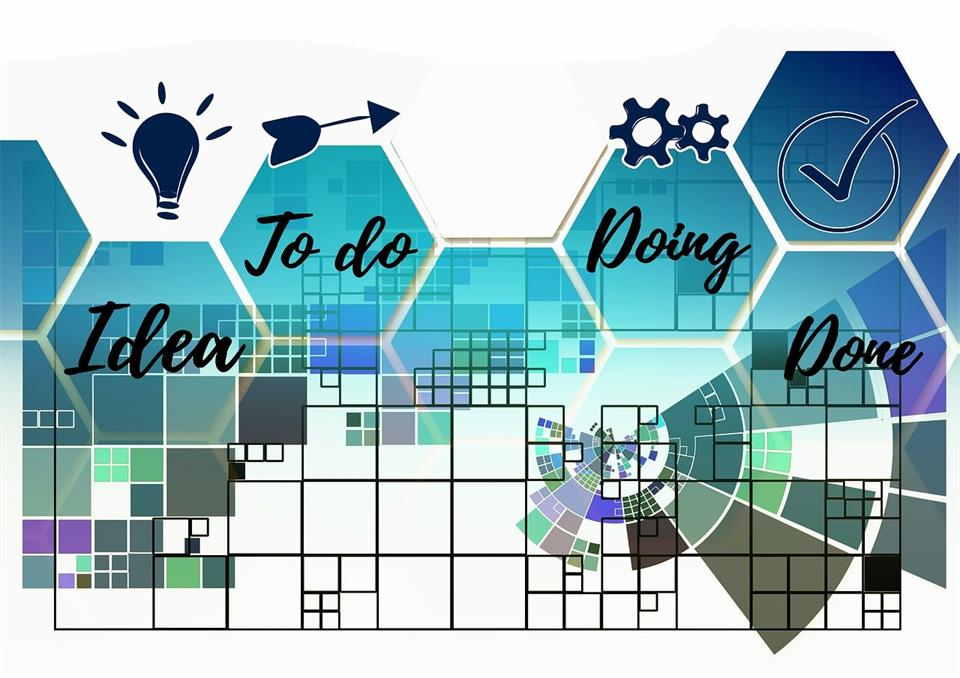
The majority of engineering organizations believe that they know the level of digitalization of their workflows. However, when they stop and take stock, they typically discover that requirements live in three different databases, change control is handled through email, and nobody actually knows which spreadsheet contains the truth.
Most systems engineering teams have a poorly understood digital readiness problem, because no one has taken the time to measure it, and you can’t improve what you haven’t mapped out.
And while mapping out your digital workflows can be a time-consuming process, it’s a hundredfold less expensive than buying new tools, finding out you underestimated the work and the cost, and being stuck with the same choices you had before.
Organizations often don’t put the needed effort into their as-is assessment because they believe they already know enough to justify the business case. However, if you skip the assessment, you’ll often find that you’ve based the business case on assumptions that were overly optimistic.
Map the Workflow End to End
To start, visualize and document the actual process followed from capturing requirements to designing, verifying, and validating the design. We don’t mean the ideal, codified version of the process found in your quality manual: we mean the steps taken any time an engineer begins work on a new requirement.
Once you’ve documented the as-is process in flowchart or swimlane form, look for broken traceability links between stages. Can you conveniently click from a requirement to the design element intended to satisfy it, and then to the test case that verifies the satisfactory implementation of that requirement?
Or do you need to ask someone and wait for a day or so while they hunt across three different software applications and a shared network drive to determine the answer? Broken traceability is one of the most evident symptoms of low digital maturity, and it’s usually the first tell of trouble caught in an audit against the ISO/IEC 15288 lifecycle stages.
Find Out What’s Actually the Source of Truth
Here is a basic test, If a drawing or a schedule delivers different info or conflicts with the model, which has authority? If you must answer either the illustration or the PDF, then the drawings, schedules, and the models you build on are your system of record.
Partnering with a digital engineering consultant early on can help you figure out whether your MBSE is just decoration or whether you actually have a digital thread.
Count the Manual Handoffs
Let’s go through your toolchain and identify all the areas where an individual exports data from one tool and then has to input it into another. For example, exporting data from requirements management and entering it into CAD, then taking the CAD output and manually entering it into a simulation tool.
Finally, taking simulation results and re-entering them into a requirements tool to update the verification status.
At each of these points, errors can occur. Data may not transfer correctly, mistakes can be made during manual entry, or some data may not be entered into the new tool at all. Interoperability between tools is generally poorer than the team expects, and in all likelihood, this is due to having inherited legacy point solutions.
Look Hard at Change Control
Engineering change requests are perhaps the most indicative element of a workflow when it comes to evaluating digital readiness. If a requirement changes, what do you get?
In a well-digitalized environment, the appropriate tools will automatically keep track of every downstream artifact, design, test, other requirements, that’s affected. In other cases, a line in a spreadsheet is the extent of it, and “Joe remembered to email the right five people” passes for impact analysis.
It’s about configuration management and change control, and barring a few exceptions of blissful ignorance, either digitalization is real where it happens, or it’s just not really happening, and there’s no “kind of” about it.
Check Skills and Appetite For Change
Introducing a new tool will not improve a process that’s already flawed. You will simply have a faster and more expensive version of the same flawed process, unless the users of the tool have the necessary modeling skills and motivation to operate differently.
Find out if your team would be willing to build and manage models instead of documents. Inquire how they would react to a new change management system that requires them to adopt different work habits.
If the answer is that they will resist these changes, it’s not a training issue that can be fixed with a short lunch-and-learn session. It’s a change management issue that must be integrated into your roadmap, rather than being treated as an add-on once the tool is already implemented.
Turn Findings Into a Phased Roadmap
Once you have identified your gaps, do not attempt to solve them all at once. Begin by identifying and implementing low-hanging fruit tool integrations. These are manual export/import handoffs that can be easily automated and provide people with quick relief.
Larger business-process changes, such as transitioning from documents to models as your primary source of truth, will come in later phases as trust in the new tools is established.
This is often the point at which many engineering organizations also realize they lack the internal bandwidth or experience to sequence the necessary changes themselves. Data governance rules, exchange standards like STEP, and digital-twin ambitions all have to line up in the right order, or you will be recreating work you just completed.
An audit like this shouldn’t take more than a few weeks if you’re honest with yourself. The value isn’t in the paperwork it produces, it’s in knowing exactly which broken link to fix first, instead of guessing.

Tech is one of those things that you always hear about, right? It’s constantly in the news for one reason or another, and it seems as though everyone is always talking about it. The thing that you need to know though, is that there’s a reason for that.
Tech is one of those things that isn’t just talked about because it’s a new trend – it’s talked about because it can be genuinely life changing, on both higher and lower levels. In this article, we’re going to be taking a look at some of the ways that it can make life easier overall, so if you’d like to know more, feel free to continue reading.
There’s An App For That
The first thing that we’re going to be looking at is the fact that there is pretty much an app for everything these days. It doesn’t seem to matter what it is, there is likely going to be an app that will help you with it.
For example, if you have photos but you want them to be on your device, then you can use a scanner for phones to ensure that you’re able to do this, and digitize the pictures you love.
Or, if you want to get involved in investing, there are apps that can help you with this too. All you need to do is do your research, and you will find so many options out there for whatever it is that you want to do.
Across Various Industries
The next thing that we’re going to say is that tech is making life easier for businesses and industries across the board. Whether you’re in the education system, healthcare industry, hospitality, or anything else, you will find that tech is necessary to move forward these days.
It takes the human error risk element out of many tasks, and it ensures that you’re able to move forward in a way that suits you.
Taking The Time Out Of Mundane Tasks
If you’re tired of the mundane tasks taking over your life, either in business or in your personal world, tech can help you with this. It helps to take the stress out of these tasks, as it takes it on for you. You don’t have to worry about them, you can put them to the back of your mind, and you don’t have to think about them.
Of course, this can’t be done for every task, but those easy, repetitive tasks that you probably hate doing can definitely be handled by a piece of tech. Life doesn’t have to be such a stress when you’ve got tech on your side taking on some of that load for you.
We hope that you’ve found this helpful, and now see some of the things that tech helps with on a daily basis. We’re not saying that tech is the only solution to make your life easier at times, but it’s certainly a good place to start, you know?

Smart Inventory Habits That Save Modern Clinics Hours

How Digital Asset Businesses Can Strengthen Compliance and Financial Reporting

How Employee Well-Being Supports Productivity and Long-Term Business Performance

A First-Timer’s Guide to Using HubSpot as a Real Estate CRM

Digital Transformation for Physical Spaces: A New Approach

125 Inspirational Car Quotes and Captions to Celebrate Your New Car

188 Deep Hurt Quotes with Images

148 Romantic Love Quotes for Her from the Heart

164 Relationship Goals Quotes for New Couples Expecting a Long Lasting Relationship

185 Cute Boyfriend Quotes for the Guy You Love
-
 Quotes6 years ago
125 Inspirational Car Quotes and Captions to Celebrate Your New Car
-
Growth6 years ago
188 Deep Hurt Quotes with Images
-
Quotes6 years ago
148 Romantic Love Quotes for Her from the Heart
-
Quotes5 years ago
164 Relationship Goals Quotes for New Couples Expecting a Long Lasting Relationship
-
Quotes6 years ago
185 Cute Boyfriend Quotes for the Guy You Love
-
Quotes6 years ago
141 Best Heart Touching Quotes about Love, Life, and Friendship
-
Quotes5 years ago
134 Time Flies Quotes for the Unforgettable Moments
-
Quotes5 years ago
122 Inspirational Kite Quotes That’ll Make You Wanna Fly Right Now