
Industry
A Comprehensive Guide to Industrial Vehicle Safety and Operator Well-Being

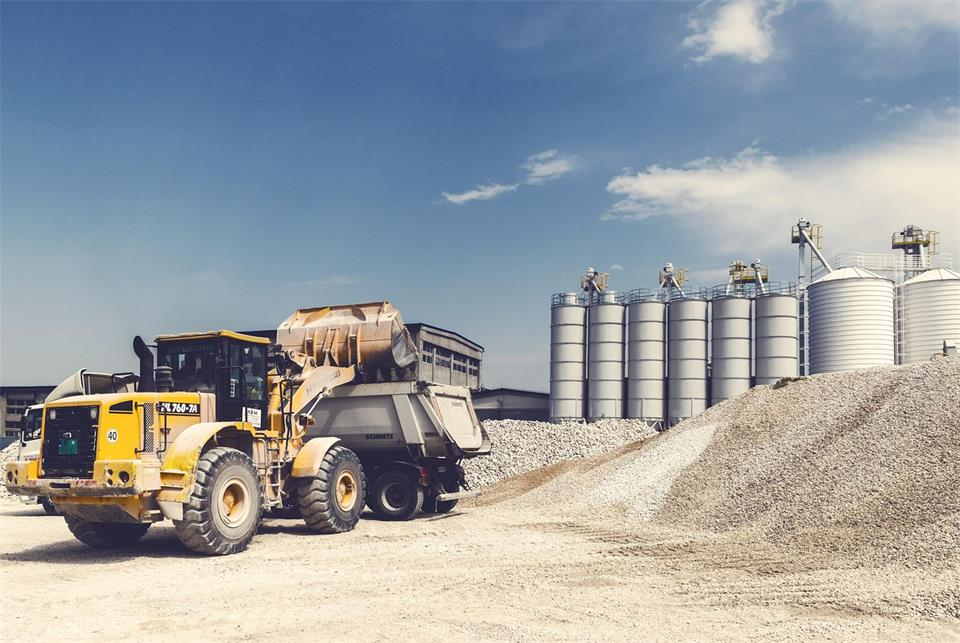
When it comes to safety and operator comfort, the seat is the most critical component of an industrial vehicle. Most safety audits overlook this fact and instead focus on the brake, mirrors, and warning lights. This article explains how the seat influences operator health and safety, and how proper seat selection can help improve outcomes on site.
Whole-body vibration is doing damage you can’t see
Forklifts, and similarly other material handling machines, are also far from the smooth, level ride experienced by operators of agricultural or construction machinery. Rough concrete, dock plates, yard irregularity, and other equipment all contribute to the transmission of shocks to the operator’s body and spine.
This is known as whole-body vibration and it adds up. One shock won’t hurt anyone. Thousands upon thousands of little shocks and repetitive jarring over the months and years will compact a spine, or destroy the soft tissue that holds a lower back in place.
The difficulty is that WBV doesn’t present itself like a cut or a bruise. The injury doesn’t knock off the clock. It just makes the operator tired and stiff. Maybe a little sore in the lower back region, but not injured. That’s normal.
Muscular soreness, especially in the lower back, is a particularly common complaint. Published work in the International Journal of Industrial Ergonomics puts the figure as high as about 70% of industrial forklift drivers suffering from work-related musculoskeletal disorders, the majority of which are back issues – taking into account that forklift drivers are seated drivers and so this exposure effectively doubles the risk of injury.
Physical discomfort has a cognitive price tag
When your muscles are sore, it’s not just painful, it’s also distracting. An operator who has to shift their weight every few minutes to ease the strain on their lower back is not fully focused on the aisle ahead, the pedestrian crossing behind them, or the load on the forks. Pain diverts attention from the task at hand, and in a warehouse full of mobile equipment and unstable loads, divided attention is an invitation to an accident.
This is the part of the safety discussion that often gets overlooked. Operator fatigue is not just a function of overall hours or length of shift. Physical fatigue leads to mental fatigue, regardless of how long it’s been since someone clocked on. A stiff neck or painful lower back prompts the release of stress hormones, elevates blood pressure, and reduces reaction time while undermining peripheral vision and alertness.
Two operators working identical shifts may have significantly different levels of fatigue based solely on the seat they are in. Comfort is not a luxury in this context. It is one of the variables that determine how soon that operator hits the brake.
Passive foam versus active suspension: the mechanics that matter
All seats do not absorb shock in the same way, and the difference matters more than many purchasers realize. A basic foam-padded seat is passive. It simply compresses under weight and provides some cushioning, but it takes no action to counter a jolt. When a vehicle hits a pothole or crosses a dock leveler, that shock is almost transmitted straight through to the operator’s spine, with the foam merely rounding off the rough edges.
Mechanical suspension seats use springs and dampers to absorb some of the shock before it reaches the operator. They are a step up, and they are standard on a lot of mid-range equipment. Air suspension and other active suspension systems go further still.
These systems adjust in near real-time to the operator’s weight and the terrain, and will actually neutralize heavy impact rather than simply take the edge off. On rough outdoor yards, dock areas, or sites with multi-shift operations all running over uneven surfaces, the difference in quality of suspension literally translates into less cumulative vibration reaching the spine over an eight or ten-hour shift.
The suspension system is arguably the single most important spec on an industrial seat, and it is also the one most often overlooked by buyers in favor of visible features like upholstery, or armrest style. When routine audits reveal worn suspension or collapsed foam, replacing the unit with a high-quality forklift seat is the most direct action a manager can take to protect operator health and maintain site safety standards.
The adjustments a multi-shift workforce actually needs
Warehouses that operate 24/7 cannot afford to assign one operator to one vehicle. A single forklift may be operated by three or four drivers during the day. And no two drivers are alike – each has different proportions, heights, and weights. A seat that is well-suited to the first driver may be dangerous to the second if it can’t be fully adjusted to him or her.
Industrially rated seats must feature weight adjustment so their suspension isn’t too firm or too soft regardless of the size of the person in it. Lumbar tension adjustment supports the natural inward curve of the lower back which differs from person to person. And backrest recline is especially vital for workers frequently reversing vehicles, since they’ll be twisting to look behind them. If the seat is too upright, they may overstrain their back’s muscular structure.
Fore and aft adjustable slide rails are necessary for correct posture. If a shorter operator can’t reach the pedals comfortably, they may not be able to react quickly enough in an emergency. If a taller operator can’t sit directly under the steering wheel, their reach to the controls is going to be compromised.
The seat as an active safety device, not just a comfort item
Let’s reconsider how seating is classified within a safety plan. Modern industrial seats are not cushioned comfortable objects disconnected from the safety systems of the vehicle. Many are wired directly into those systems.
Operator presence detection sensors, OPS switches for short, are integrated directly into the seat cushion. If the operator rises from the seat while the vehicle is powered, the sensor immediately cuts hydraulic function and drive power.
A forklift will not so much as lurch a wheel. This prevents one of the most common, dangerous lifting truck incidents: forklift creepage forward, or mast lowering while the operator is absent from the seat or has been thrown from it. Seat belt interlock systems are much the same in principle: the vehicle refuses to move until the belt is fastened and then clamps the vehicle in place.
Of course, these systems are only as good as the seat they are built into. A worn out presence sensor that has gone unresponsive, or a seat belt anchor that has loosened over years of use, renders the entire safety feature null.
This is perhaps the most persuasive argument for including seating with core safety equipment, like brakes and warning horns, rather than considering it to be a nice optional extra that you only assess a decade or so later when it gets uncomfortable.
The financial case for upgrading seating before it fails
Health and Safety and procurement departments may find it challenging to justify an investment in something as seemingly unimportant as operators’ seats. But the numbers often add up once you do the calculations.
Musculoskeletal disorders result in absenteeism, which leads to an increase in labor costs due to overtime, temporary labor, and lost production while replacement operators become familiar with a site’s operations.
Workers’ compensation claims related to back injuries often constitute some of the most expensive payouts and administrative costs for locations to process. In the worst-case scenario, just one claim relating to a serious back injury could cost more than the upgrade of operator seats over an entire fleet for several years.
Then, there are the slower-to-quantify costs of uncomfortable operators: Longer cycle times, more careful – and hence slower – product manipulation, and unpreparedness to work longer hours breed through reduced throughput. These are not recorded on the incident sheet, but they hit the bottom line over time. A productivity-based argument can be much more persuasive than a wellness-led argument to the finance department.
A daily inspection checklist worth actually using
Seating preventive maintenance is one of the first things to be skipped on a pre-shift inspection. A cracked hydraulic hose gets attention. A slowly collapsing foam cushion doesn’t, until an operator complains months later.
A useful daily check should cover:
- Cushion condition – press down on the seat base and backrest. Collapsed or permanently compressed foam has lost its shock-absorbing ability, even if the vinyl looks fine.
- Suspension response – bounce test the seat. If it feels stiff, sticky, or bottoms out easily, the dampers or springs may be worn.
- Seat belt integrity – check for fraying, a buckle that doesn’t latch firmly, or a retractor that doesn’t lock under tension.
- Presence sensor function – confirm the vehicle disables drive and hydraulic function when weight is lifted off the seat.
- Adjustment mechanisms – test that weight, lumbar, recline, and slide adjustments all move freely and hold their position under load.
- Structural mounting – check for cracks in the seat base, loose bolts, or corrosion at the mounting points.
None of these checks take more than a couple of minutes, and they should sit alongside the standard brake, horn, and hydraulic checks that most sites already run every shift. Waiting until a seat is visibly falling apart usually means the operator has already been absorbing excess vibration and poor support for months.
Compliance, duty of care, and the paper trail that protects everyone
Occupational health and safety frameworks in most jurisdictions place a clear duty of care on employers to manage known ergonomic risks, and whole-body vibration exposure is well documented as one of them. International standards addressing vibration exposure limits give safety teams a measurable benchmark to work against, rather than relying on subjective complaints from operators.
Documenting seat inspections, suspension performance, and adjustment features as part of a formal maintenance and ergonomics program does two things at once. It reduces the actual risk of injury on site, and it builds a record showing the business took reasonable, proactive steps to manage a known hazard.
That record matters if a claim is ever filed, because the difference between “we had no idea” and “we inspect and replace seating on a documented schedule” is often the difference in how a claim gets assessed.
Treating seat maintenance as a compliance activity rather than an optional comfort upgrade also tends to keep it on the maintenance calendar permanently, rather than something that gets pushed back every time budgets tighten.
Where site safety actually starts
Brakes stop a truck and lights warn people it’s coming, but the seat is what tells if the person behind the wheel is alert, comfortable, and physically able to react fast when it matters. A safety program that looks over every mechanical system on a truck but overlooks the seat is only managing half the risk. The other half is sitting right there, holding the driver up for eight hours a day.

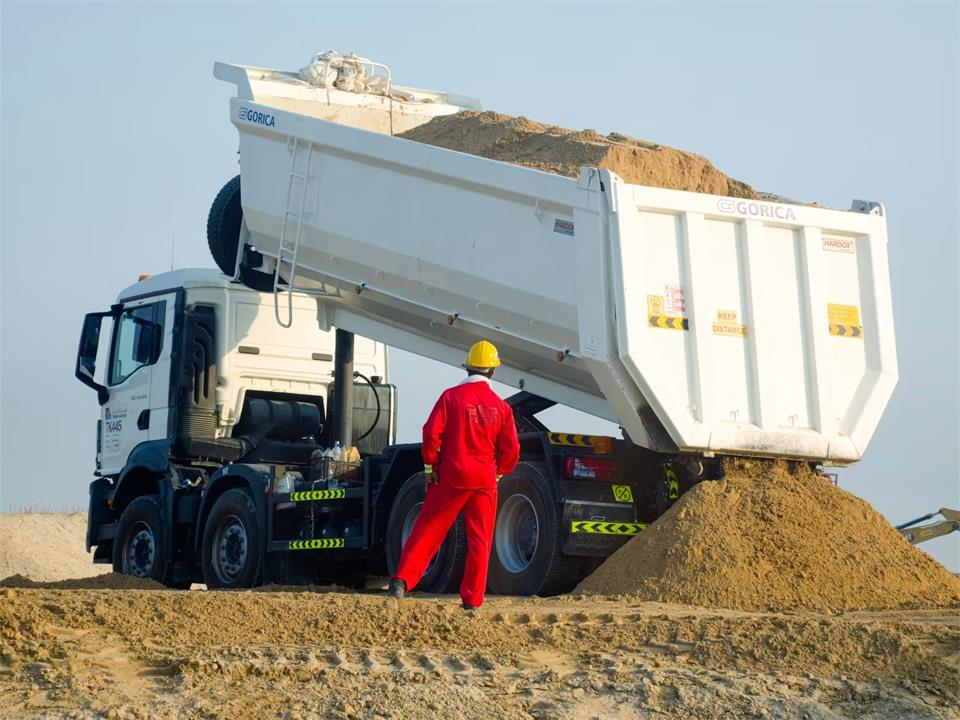
The safety features in today’s industrial vehicles — from backup cameras on delivery vans to advanced collision avoidance systems on heavy-duty trucks — aren’t just clever engineering. They come from a complex mix of public policy, government rules, and new technology.
When we look at how government shapes vehicle design, we see a constant cycle: standards push progress, and that progress then helps create future standards. This back-and-forth makes sure the vehicles in our warehouses, on construction sites, and on our highways get safer for everyone.
Evolution of Vehicle Safety Standards
Vehicle safety has a history of slow, hard-won progress. Early on, when the automotive industry was just starting, safety wasn’t a priority. Manufacturers focused more on how vehicles performed and looked.
Big changes often only happened after tragic accidents caused public outrage. Initial safety standards were reactive, eventually leading to mandatory features we now take for granted, like seatbelts and shatter-resistant windshields.
A key moment highway safety breakthrough was when safety equipment went from being optional to standard, fundamentally changing how manufacturers and the public saw a vehicle’s basic responsibilities.
Over time, the focus has shifted. We used to concentrate on passive safety — features that protect people *during* a crash. Now, we’re more concerned with active safety, which tries to *prevent* crashes altogether. Technologies like anti-lock braking systems (ABS) and electronic stability control (ESC) were pioneers here.
These systems use sensors and software to help drivers keep control in emergencies. For industrial vehicles, this shift has been especially important. Because these vehicles are so large and heavy, preventing an accident is far better than just lessening its impact.
Today’s standards increasingly reflect this proactive approach, pushing for integrated systems that watch the vehicle’s surroundings and can step in automatically to avoid danger.
Government Mandates Driving Innovation
Government regulations often kickstart new safety technologies, moving them from ideas to mass production. When the government requires a specific safety feature, it gives manufacturers a clear, non-negotiable goal.
This removes the disadvantage of adding costs for a feature that competitors might skip. Instead, it levels the playing field, making the whole industry advance together. For instance, the rule requiring electronic stability control in passenger vehicles led to its quick adoption and improvement, and that technology has since been adapted for heavy trucks and buses.
This process isn’t always simple. Creating rules for complex new technologies needs deep technical understanding and teamwork between government agencies and industry experts. Navigating this complicated regulatory world often calls for specialized knowledge.
This is where a professional Government Affairs Firm can offer crucial guidance. These firms help companies understand upcoming laws, talk with regulators, and ensure new rules are both effective for public safety and practical for manufacturers to implement.
This conversation is vital for shaping the future of automotive technology and regulation, making sure innovation can thrive within clear, predictable rules. The result is a powerful engine for progress, with public policy setting the direction and industry providing the innovation.
The Role of Industry Associations
While government rules set the minimum safety requirements, industry associations often help raise the bar even higher. Groups like SAE International, the American Trucking Associations (ATA), and the Association of Equipment Manufacturers (AEM) are key players in developing and promoting best practices.
They bring together competing manufacturers, suppliers, and end-users to work on shared challenges. This collaboration can lead to voluntary standards that address new safety issues long before government regulations are put in place.
These voluntary standards aren’t just suggestions; they often become the unofficial industry benchmark for quality and safety. For example, an association might create a standard testing method for a new type of sensor or a recommended way to design driver assistance system interfaces.
Companies that adopt these standards can show customers they’re committed to safety beyond what the law requires. In many cases, these industry-developed standards eventually become the technical foundation for future government regulations.
This cooperative model lets the industry use its combined technical expertise to solve problems efficiently, while also giving regulators a clear path to turn those solutions into law.
Global Policy Trends in Vehicle Safety
In our global economy, vehicle safety policy doesn’t happen in isolation. Rules set in one major economic region, like the European Union or the United States, can affect the whole world. Manufacturers aim to build “world cars” or “world trucks” — vehicles that can be sold in many markets with few changes.
This gives a strong reason to harmonize safety standards. When one market introduces a tough new requirement, it often becomes cheaper for a global manufacturer to use that standard across all its products rather than making different versions for different countries.
A big focus today is developing policies for automated vehicle safety. As vehicles become more capable of driving themselves, governments worldwide are figuring out how to regulate them. This includes everything from defining automation levels to setting requirements for cybersecurity and data recording.
The policy challenges of self-driving cars and industrial vehicles are huge, needing international cooperation to ensure a truck operating semi-autonomously in one country behaves predictably when it crosses a border into another.
Organizations like the United Nations’ World Forum for Harmonization of Vehicle Regulations (WP.29) are crucial places for these discussions, working to create a common technical and legal framework for safely rolling out future vehicle technologies.
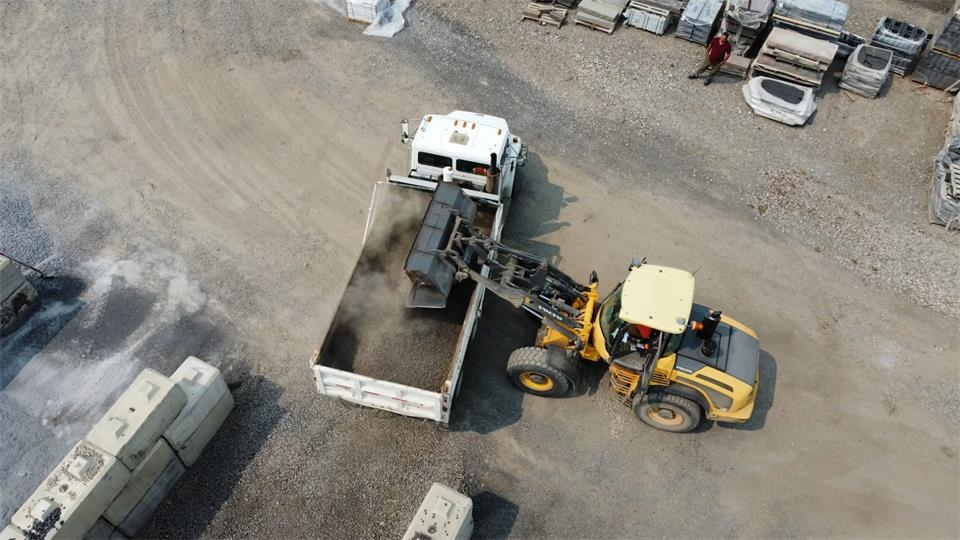
Designing for Compliance and Performance
For engineers and designers at vehicle manufacturing companies, policy isn’t some abstract idea; it’s a core design limitation. The challenge is to meet or exceed every applicable safety regulation while also delivering a vehicle that’s efficient, reliable, and profitable. This is a delicate balancing act.
Adding a new safety system might add weight, which could reduce a truck’s fuel economy or payload capacity. Integrating a new sensor might require an expensive redesign of the vehicle’s body or electrical system.
To handle this complexity, leading manufacturers no longer treat safety as an add-on. Instead, compliance is built into the design process from the very start.
Using advanced computer-aided engineering (CAE) and simulation tools, engineers can model how a vehicle will perform in various crash scenarios and test different safety systems long before a physical prototype is ever built.
This “virtual prototyping” lets them explore different design options, spot potential problems early, and optimize the vehicle for both safety and performance. The goal is to create a vehicle where the safety systems are so seamlessly integrated that they improve the operator’s experience rather than getting in the way.
This approach not only ensures compliance but also results in a better, safer, and more effective product.
Ultimately, the relationship between policy and industrial vehicle safety is a powerful feedback loop. Regulations push manufacturers to innovate, and those innovations then show what’s possible, paving the way for the next generation of even more effective safety standards.
This cycle of continuous improvement is what will keep driving the safety of our industrial vehicles forward for years to come.
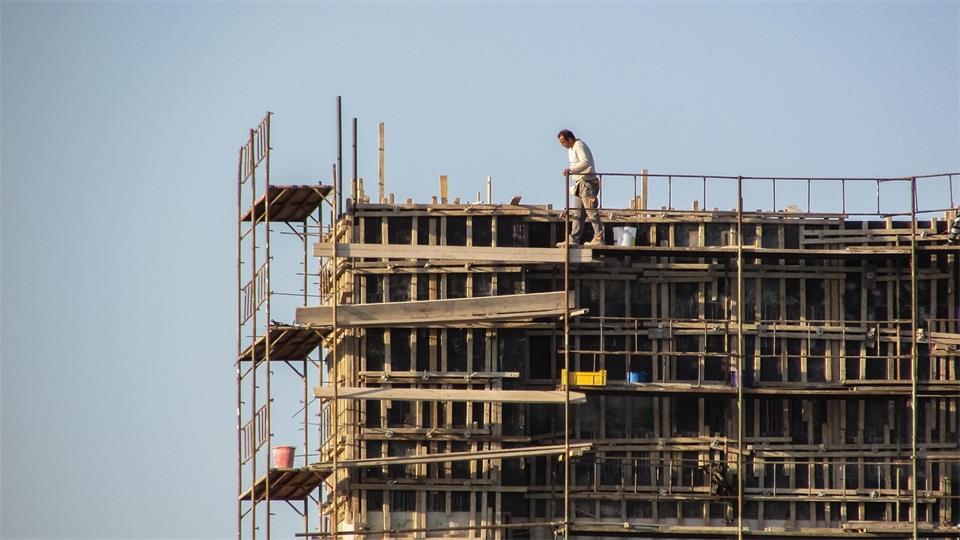
Approximately 11% of all traumatic work-related fatalities in construction over the past five years were due to Falls from Heights (Safe Work Australia). It doesn’t vary by much year to year, and it won’t until site managers stop viewing height safety as merely ticking a compliance box and start appreciating it as a critical factor in project time management.
On detailed commercial builds, the right decisions about scaffolding type, rated loadings, inspection frequency, and emergency egress at the design and mobilization phase can mean the difference between progressing solidly with no fuss or being mired in a world of wasted time rework, near-miss reports and liability suits.
The hierarchy of control isn’t optional on complex sites
Every competent safety professional is grounded in the hierarchy of control, but arming this knowledge with sufficient nuance to apply to complex commercial sites is a bit more difficult. The concept itself is nice and straightforward – passive fall prevention always comes before personal protective equipment.
But practically, what that looks like is that, before scaffolding or temporary guardrails or harnesses are even mentioned, you should exhaust every option to remove the need to go near that edge in the first place.
This primary line of defense can’t be overstated. Fall arrest systems (by which we mean, harnesses, lanyards, and anchor points) depend on human perfection – each worker, each day, getting the equipment and attachments right.
It’s a lot to ask, particularly of a low-paid contractor facing stress and time disadvantages on the job. Remove that responsibility from human shoulders altogether, and let only machines make life-or-death decisions. If a guardrail is in the way, it doesn’t matter if the worker forgot his gear or attached it to the wrong bracket.
This also, for what it’s worth, means that a half-hearted “preliminary” or “temporary” guardrail that only covers part of the site won’t do. A passively protected zone must be entirely that – or you can throw the benefits of passive edge protection for falls away.
Solving the urban footprint problem
High-density commercial sites create a specific set of problems that don’t exist on greenfield developments. Tight property boundaries, live pedestrian thoroughfares, overhead powerlines, and shared access roads compress every logistical decision. The scaffold can’t simply be erected wherever it’s most convenient – it has to be designed around a set of constraints that often conflict with each other.
This is where local knowledge and licensed expertise matter more than price. Providers who understand regional council permit requirements, traffic management obligations, and local utility clearance rules can shortcut months of remedial redesign.
Partnering with a specialist in commercial scaffolding perth, for example, means working with a team that already understands the specific approval processes, heritage overlay considerations, and pedestrian management requirements for that environment – rather than learning them reactively after a council stop-work order.
Night-time erection schedules are often unavoidable in CBD settings. Road closures and footpath occupancy permits frequently restrict daytime access, which means scaffold erection and dismantling happen in shifts outside of peak hours. That introduces its own risks: reduced visibility, fatigue management, limited supervision.
These conditions require detailed Safe Work Method Statements that specifically address after-hours operations, not generic SWMS documents repurposed from a previous project.
Drop zones and exclusion zones have to be designed in parallel with the scaffold layout, not added as an afterthought. Any overhead works – including the erection and dismantling process itself – require ground-level barricading that accounts for the maximum possible fall radius of any object. In urban environments, that often means temporary covered walkways to maintain pedestrian access without exposing the public to overhead risk.
Compliance with AS/NZS 1576 is structural, not administrative
The AS/NZS 1576 series of standards relates to the design, materials, erection, and use of scaffolding systems. It’s not a case of complying with a set of paperwork for its own sake – the regulations are laws of physics applied to construction. Non-certified components or deviating from the standard load classification system doesn’t just open you up to an audit risk; it creates a real risk of structural collapse.
Loads under AS/NZS 1576 are categorized as Light Duty, Medium Duty, and Heavy Duty, with specific kPa ratings for each. The classification specified must describe what will occur on the deck – not what was originally intended if trades and project scopes have changed.
A deck decreed for painters can easily become a bricklayer’s domain with pallets of product if sequencing isn’t managed, as it’s the easiest part of the chain to get wrong. This is how rated capacity gets blown without any deliberate flouting of the rules.
Structural ties, the fixings between the scaffold and the building’s structure, must be tied back to load-bearing aspects, not surface cladding or facades. On heritage buildings or unusual facades, this will require early coordination between the scaffold designer and the building’s structural engineer. You won’t know if you’ve missed the mark until the rig gets its live load.
All scaffolders working over four meters must possess a High-Risk Work Licence. Checking this at site induction isn’t a paperwork or BYO approach. It’s not negotiable to discover post-incident that an unlicensed scaffolder is on site – it’s an easy catch for an insurer.
Inspection schedules that reflect actual site conditions
A scaffold that was inspected when it went up and then never looked at again until it came down is an incident waiting to happen. The “every 30-day” standard poses a low barrier for many companies seeking to cut costs, but doesn’t take into account what can happen to a scaffold structure in a week of high winds, a deluge of rain, or in the aftermath of a major modification to deck configuration.
The Scafftag system – the green and red tag inspection system – is a field-level visible means of communicating the current status of the scaffolding to every trade on site. Green tag means inspected and access approved. Red tag means access is prohibited until a licensed scaffolder has made the call. It is a best practice only if supervisors and workers are trained to respect red tags and supervisors enforce access restrictions.
Post-event extreme weather event and modification to deck inspections are mandatory, not optional. A licensed scaffolder must inspect after any extreme weather event, especially high winds. No one should access the scaffolding until the inspection has taken place.
The same holds true for even minor modifications to decks: a scaffold is not a collection of pieces; it is a system. Changes to one component affect load distribution and tie capacity across the entire structure.
Engineered solutions for non-standard structures
Most commercial projects eventually throw up a scenario that a standard modular scaffold system wasn’t designed to handle. Cantilevered scaffolds over public thoroughfares, suspended swing stages for high-rise facade work, platforms erected over fragile roofing or skylights – these aren’t unusual on complex sites, but they do require a different level of engineering input.
Engineered access solutions engage a structural engineer in the design process itself. This means providing concept and detailed plans and designs that aren’t just desktop studies but real-world drawings that consider necessary working platform, guardrail loadings, tie capacities, and window cleaning requirements.
On heritage facades, the challenge is often that the building’s existing structure can’t accept the anchor loads that a conventional tied scaffold would generate. In these cases, freestanding scaffold systems with internal ballasting or alternative tie configurations may be required. Identifying this early, during the planning phase, is dramatically cheaper than discovering it mid-erection.
This heightened level of design commitment from the scaffold contractor can’t go unrewarded. To get best value from engaging engineered access solutions providers, don’t simply default back to expecting the regular price competition between a few scaffold contractors to deliver the best price for the design solution. For safety reasons, and legal liability, if no other, it’s not appropriate to cheapen the process.
Managing multiple trades on a single scaffold system
Commercial scaffold structures typically support multiple trades at once. For example, bricklayers, window installers, facade cladders, and painters must all have access to a deck, often at the same time. Without planning, unloading of materials and equipment, deck load limits, and the risk of dropped objects will escalate.
The solution is a scaffold access schedule that functions like any other site coordination document. Each trade is allocated specific decks and time windows. Load limits are posted at every deck access point, and site supervisors have authority to remove personnel and materials that exceed those limits.
The Handover Certificate – the formal safety clearance document issued by the licensed scaffolder before any trade accesses the structure – specifies the load limits and access conditions for each level of the scaffold. It’s not a formality; it’s the legal document that transfers responsibility for appropriate use from the scaffolding contractor to the principal contractor.
Falling object protection has to be built into the scaffold design, not retrofitted when someone raises a concern. Debris netting attached to the scaffold’s outer face, catch platforms at intermediate levels on tall structures, and properly installed toe-boards on every working deck are all part of the standard package on a commercial site. Any gap in these systems is a gap in the protection of ground-level workers and the public.
Emergency rescue planning – the requirement most sites get wrong
Occupational health and safety laws say you need a piece of paper saying how you’re going to rescue someone who gets into trouble above ground level. Typically, every site has a document nominally covering this. In reality, very few sites have a plan that works in practice.
Every ‘phone emergency services’ plan fails the common real-world test: if the emergency is ‘I can’t hold on’ or ‘that guy’s not moving’. In these scenarios – which are the real reason for having a rescue protocol in place – the ambulance is not going to be much use.
For suspended access work platforms, industrial rope access, and scaffold or barriers above level zero, where there’s a significant chance a rescue will be needed, planning for self-sufficiency is a must. A good rescue plan specifies what trained on-site personnel, equipment, and procedures a responsible person can call on – not hypothetically but for the actual time it will take for the casualty to become an emergency and then a fatality.
In the context of the guidance provided by the Working at Heights Association (WAHA), a rescue plan involves providing a full work method statement for the rescue of common ‘time is critical’ and ‘dead fall’ scenarios. The document will specify who is responsible for making the call and who is responsible for executing the rescue, as well as what trained resources and equipment will be used.
If equipment forms part of the plan it needs to be ‘rescue ready’ for prompt deployment. A good rescue plan will also detail how and when to review and revise the plans and this training.
Getting height safety right on complex commercial sites doesn’t reduce productivity – it creates the conditions for trades to work without interruption, without incident, and without the delays that follow any serious event. The projects that run on time and on budget are usually the ones where someone spent the most time on this planning before the first component left the yard.

A First-Timer’s Guide to Using HubSpot as a Real Estate CRM

Digital Transformation for Physical Spaces: A New Approach

Digital Readiness: Future-Proofing Your Business Operations

From Onboarding to Upskilling: Building Corporate Training That Works

The Psychology of Space: How Floor Plan and Layout Impact Visitor Behavior at Trade Shows

125 Inspirational Car Quotes and Captions to Celebrate Your New Car

188 Deep Hurt Quotes with Images

148 Romantic Love Quotes for Her from the Heart

164 Relationship Goals Quotes for New Couples Expecting a Long Lasting Relationship

185 Cute Boyfriend Quotes for the Guy You Love
-
 Quotes6 years ago
125 Inspirational Car Quotes and Captions to Celebrate Your New Car
-
Growth6 years ago
188 Deep Hurt Quotes with Images
-
Quotes6 years ago
148 Romantic Love Quotes for Her from the Heart
-
Quotes5 years ago
164 Relationship Goals Quotes for New Couples Expecting a Long Lasting Relationship
-
Quotes6 years ago
185 Cute Boyfriend Quotes for the Guy You Love
-
Quotes6 years ago
141 Best Heart Touching Quotes about Love, Life, and Friendship
-
Quotes5 years ago
134 Time Flies Quotes for the Unforgettable Moments
-
Quotes5 years ago
122 Inspirational Kite Quotes That’ll Make You Wanna Fly Right Now